Website development
Marketing sites, customer portals, and internal web applications, built with a CMS your marketing or operations team can edit directly. We keep the content model simple so publishing a new page does not need a developer.
 Innosys
ASIA TECHNOLOGIES
PAYA LEBAR, SINGAPORE
60 Paya Lebar Road, #06-28, Paya Lebar Square, Singapore 409051
5859730689
Monday to Friday, 9:00 AM – 6:00 PM
Start a project
Innosys Asia Technologies · Paya Lebar, Singapore
We design and build custom websites, mobile apps, and digital products for businesses that need working software, not slide decks. Most of our clients come from Paya Lebar, the CBD, and the eastern business belt.
Who you are talking to
Innosys Asia Technologies is a Singapore-based IT and digital solutions partner. Our office is at 60 Paya Lebar Road, #06-28, Paya Lebar Square, Singapore 409051, and we work Monday to Friday, 9:00 AM – 6:00 PM.
If you are comparing vendors right now, the useful question is not who has the longest portfolio. It is who can sit with your operations team, map how work actually flows, and then ship something your staff will use on Monday morning.
A working platform your team can edit, not a brochure that freezes the day it launches.
Three service lines carry most of our work, and they usually meet in the middle of the same project: the website your customers see, the app your field team carries, and the admin side that keeps the records straight.
What we build
Web development covers marketing sites, customer portals, and internal web applications, usually on a modern JavaScript or PHP stack with a CMS your team can edit without calling us.
Mobile app development covers iOS and Android products, often built in Flutter from a single codebase when speed and consistency matter more than platform-specific depth.
Marketing sites, customer portals, and internal web applications, built with a CMS your marketing or operations team can edit directly. We keep the content model simple so publishing a new page does not need a developer.
iOS and Android products for customer use, field service, and internal teams. Flutter gives us one codebase for both platforms; we move to native when the project leans on camera, background location, or Bluetooth hardware.
Taking an internal process, a booking flow, or a reporting need and turning it into a real application with user accounts, data storage, and an admin side. System integration ties it together so data moves once and gets read everywhere.

Singapore businesses ask this constantly, and the honest answer depends on where your process sits. If you sell the same way as ten thousand other companies, a subscription tool will do the job for a fraction of the cost.
If your workflow is the thing customers pay you for, or if your team has built a spreadsheet that everyone secretly depends on, custom software starts to pay for itself.
A practical test
Count the manual steps between a customer enquiry and a fulfilled order. If the number is high and the steps involve copying data between systems, that is usually an integration or custom build problem, not a training problem.
Flutter lets us ship a mobile app for iOS and Android from one codebase, which keeps early-stage budgets sane and keeps both platforms visually identical. It suits customer apps, field-service tools, and internal apps where the interface is mostly forms, lists, and dashboards.
Native development still earns its place when you lean hard on device features: heavy camera work, background location, Bluetooth hardware, or platform-specific payment and identity flows. We will tell you which side of that line your project sits on before you commit to a budget.
Both platforms look and behave the same, and a single change ships to iOS and Android together. A good fit for forms, lists, and dashboards.
Heavy camera work, background location, Bluetooth devices, or platform payment and identity flows justify building separately for each platform.

Most of the pain we see is not a missing app. It is four systems that each hold a different version of the same customer. We connect CRM platforms such as Salesforce for larger sales and service teams, and HubSpot where a smaller team wants lead capture, email, and pipeline in one place without enterprise overhead.
The work is API-first. Every integration gets documented endpoints, test cases in Postman, and error handling for the day a third-party service returns something unexpected at 2am. That is unglamorous and it is most of what keeps a system trustworthy.
Larger teams
Where several people touch the same account and the history matters, we connect the website, quoting, and support records so the account view is complete.
Smaller teams
Lead capture, email, and pipeline in one place for teams that do not need a heavy CRM rollout. Usually the fastest route to a single customer record.
The work itself
Every connection is documented and tested, so when a third-party service changes behaviour you can see what broke instead of guessing.
Failure handling
Retries, alerts, and a readable log for the times a service returns something unexpected. Boring, and the reason the system stays trustworthy.
We build on AWS for most web applications and mobile back ends, using its managed database, storage, and messaging services rather than reinventing them. Docker containers standardise the environment so the version running on a developer's laptop is the version running in production, which removes a whole class of "it works on my machine" failures.
You do not need to care about containers. You do need to care that a release does not require a maintenance window and a prayer.
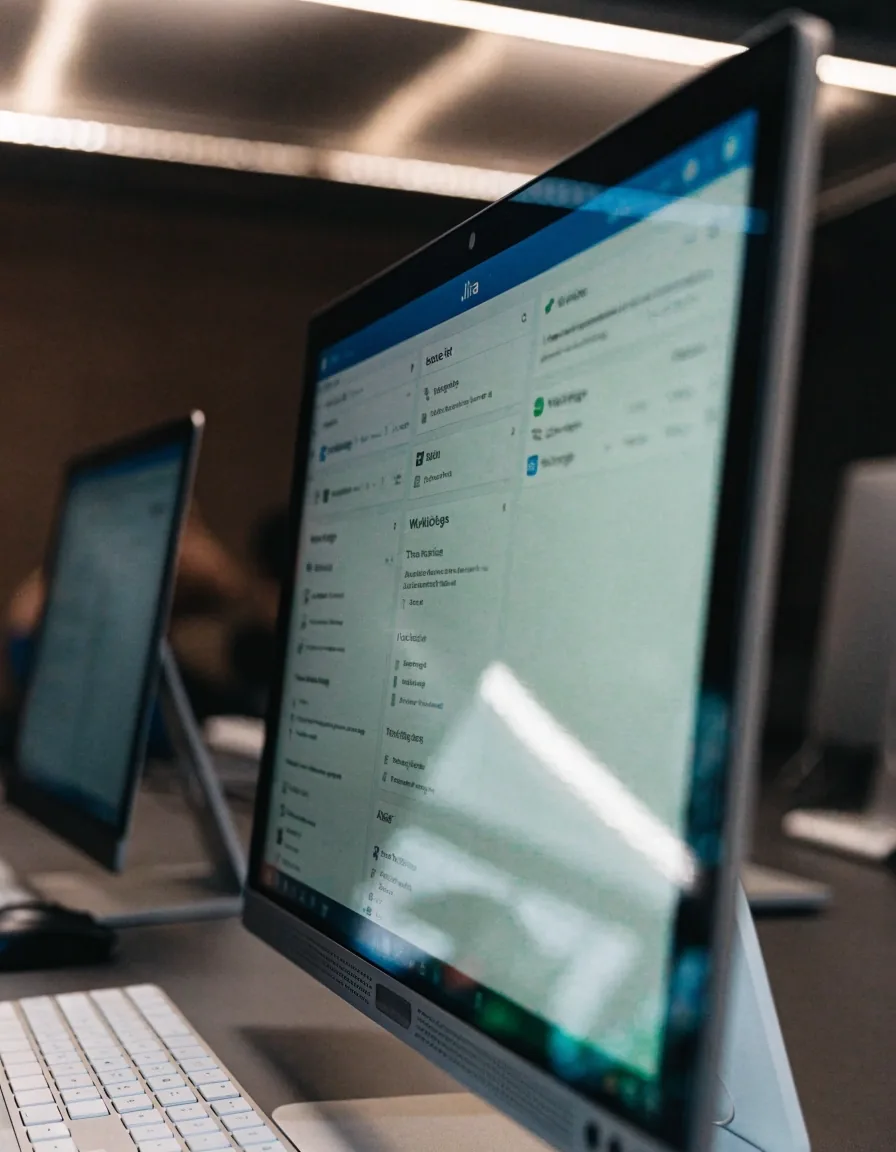
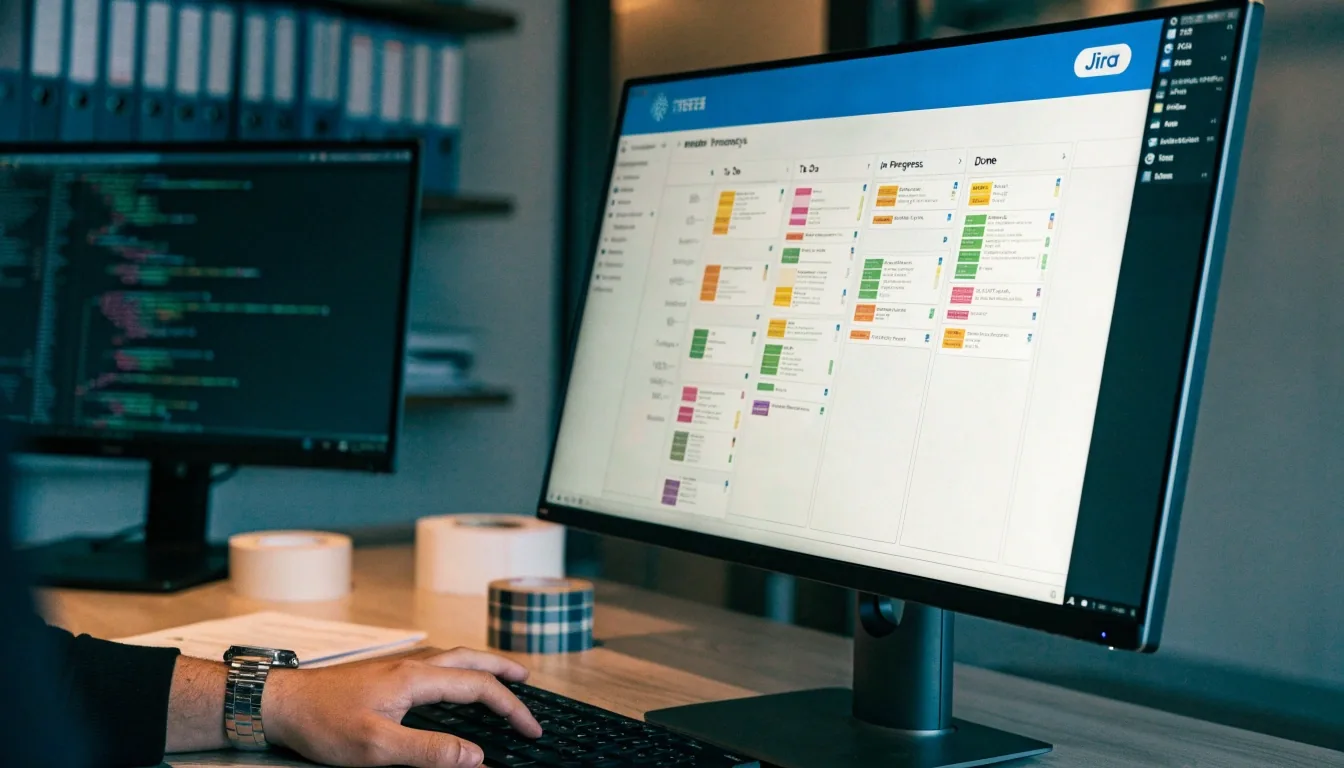
Delivery is tracked in Atlassian Jira, and clients get access to the board. You can see what is in the current sprint, what is blocked, and what shipped last week without asking for a status email.
Read our delivery approachWe sit with the people who will actually use the system. For a first engagement we usually start with a short discovery before anyone writes code.
Once the workflow is clear, we agree a written scope. Scope changes get priced and scheduled openly instead of quietly absorbed until the deadline breaks.
We build in two-week cycles and demo working software rather than describing it. The Jira board stays open to you the whole time.
We would rather say this early than three months in.
Those projects fail for predictable reasons.
Singapore's digital economy momentum is real and it has changed buyer expectations. Recent IMDA reporting on the 2026 digital economy points to near-universal digitalisation among local enterprises, with AI adoption accelerating across sectors. That shifts the conversation from "should we have a digital channel" to "is our data clean enough to do anything useful with it".
In practice, AI adoption stalls when customer records live in three systems and nobody trusts the numbers. The unglamorous work of integration, consistent data models, and workflow automation is what makes the visible layer possible. We would rather build that foundation properly than bolt a chatbot onto a mess.
Where the work goes first
Start with the process that costs you the most time each week. Not the most exciting idea, the most expensive one. A booking flow that takes four staff-hours a day, a quoting process that lives in email, a report someone rebuilds every Monday.
Bring that to a first call. We will tell you whether it is a configuration problem, an integration problem, or a genuine custom build, and roughly what each path involves.
The tool already does this. We help you set it up and train the team to use it properly.
The systems work separately but do not talk. We connect them and remove the manual copying.
The workflow is your advantage. We scope and build it as a real application.
Not sure which one you have? Send a short description of the process and we will tell you on a first call — no proposal needed to get an answer.
Straight answers to the four things Singapore businesses ask most often when they are weighing up an IT or digital solutions partner.
A focused website or internal web application usually runs six to twelve weeks from agreed scope. Mobile apps and multi-system integrations take longer, and we will give you a realistic range after discovery rather than a number designed to win the pitch.
Yes. We are based in Singapore and most clients are local, but we run projects with regional teams across Asia. Meetings are scheduled in Singapore time and we keep documentation in English so distributed stakeholders stay aligned.
Often, yes. We start with a code and infrastructure review, then give you an honest assessment of what is salvageable. Sometimes the answer is to keep most of it. Sometimes it is cheaper to rebuild a specific module than to keep patching it.
We design access control, audit logging, and data retention into the system from the start, and we follow Singapore's PDPA requirements for the data your business collects. Specific obligations depend on your sector, and we will flag anything that needs your own legal review.

We are at 60 Paya Lebar Road, #06-28, Paya Lebar Square, Singapore 409051, and available Monday to Friday, 9:00 AM – 6:00 PM. Most first conversations happen over a call or a coffee near the office.